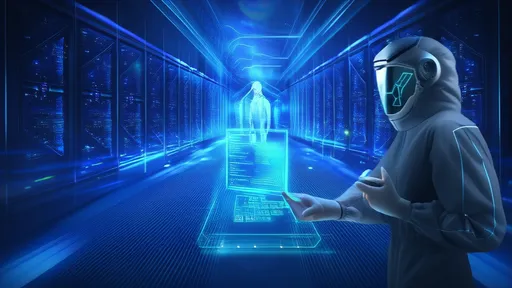
The gaming industry has undergone a seismic shift in recent years, with cloud gaming emerging as a dominant force. As players increasingly stream games directly from remote servers, the need for robust data security has never been more critical. Traditional encryption methods, while effective against conventional threats, may soon face challenges from quantum computing. This is where quantum encryption steps in, offering an unprecedented level of protection for the sensitive data flowing between players and cloud gaming platforms.
Cloud gaming relies on the seamless transmission of vast amounts of data, including user inputs, video streams, and personal information. Any breach in this pipeline could lead to catastrophic consequences, from stolen accounts to manipulated gameplay. Current encryption standards, such as AES and RSA, have served the industry well, but their vulnerability to quantum attacks looms large. Quantum computers, with their ability to perform complex calculations at unimaginable speeds, could theoretically crack these codes in a matter of seconds.
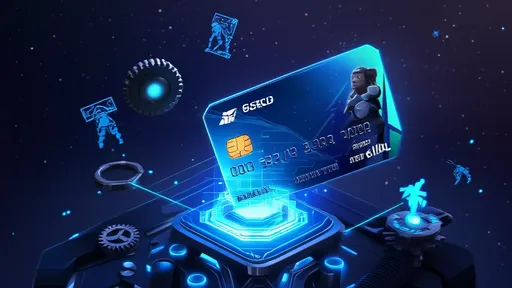
Quantum encryption, particularly Quantum Key Distribution (QKD), presents a revolutionary solution. Unlike classical encryption, which depends on mathematical complexity, QKD leverages the fundamental principles of quantum mechanics to secure communication. Any attempt to intercept the quantum keys would disturb their state, alerting both parties to the breach. This makes QKD virtually unhackable, providing an ideal safeguard for cloud gaming's data-intensive environment.
The implementation of quantum encryption in cloud gaming isn't without its hurdles. The technology requires specialized hardware, such as photon detectors and quantum repeaters, which can be costly and complex to deploy. Moreover, maintaining the integrity of quantum signals over long distances remains a technical challenge. However, recent advancements in quantum networking and satellite-based QKD have shown promising results, bringing us closer to a future where quantum-secured cloud gaming is a reality.
Several industry leaders have already begun exploring quantum encryption for gaming. Major cloud gaming platforms are collaborating with quantum technology firms to pilot QKD-integrated systems. These early initiatives aim to test the feasibility of quantum-secured data transmission in real-world gaming scenarios. While widespread adoption may still be years away, the groundwork is being laid for a new era of unhackable gaming experiences.
The implications of quantum-secured cloud gaming extend beyond mere data protection. Players could enjoy completely cheat-free environments, as quantum encryption would prevent tampering with game data in transit. Developers, too, would benefit from enhanced intellectual property security, ensuring their games remain uncompromised from server to screen. As the line between physical and digital gaming continues to blur, quantum encryption might just be the key to preserving trust in the cloud gaming ecosystem.
Critics argue that the current infrastructure isn't ready for quantum encryption at scale. They point to the need for widespread fiber optic networks capable of supporting QKD and the high costs associated with quantum-ready hardware. Yet, as with any transformative technology, early adoption often comes with challenges that gradually resolve as the technology matures. The gaming industry, known for its rapid innovation cycles, could play a pivotal role in accelerating quantum encryption's mainstream acceptance.
Looking ahead, the marriage of quantum encryption and cloud gaming could redefine online security standards across industries. What begins as a means to protect high-score data and in-game purchases might evolve into a blueprint for securing all forms of sensitive digital communication. For now, gamers and developers alike watch with anticipation as this cutting-edge technology promises to make lag and latency the only remaining enemies in cloud gaming's battle for perfection.
By /Jul 29, 2025

By /Jul 29, 2025

By /Jul 29, 2025
By /Jul 29, 2025

By /Jul 29, 2025

By /Jul 29, 2025
By /Jul 29, 2025
By /Jul 29, 2025
By /Jul 29, 2025

By /Jul 29, 2025

By /Jul 29, 2025

By /Jul 29, 2025

By /Jul 29, 2025

By /Jul 29, 2025

By /Jul 29, 2025
By /Jul 29, 2025

By /Jul 29, 2025
By /Jul 29, 2025

By /Jul 29, 2025

By /Jul 29, 2025
