Consciousness Cloud Trial": Brain Scan Data as Legal Evidence

Jul 29, 2025 By

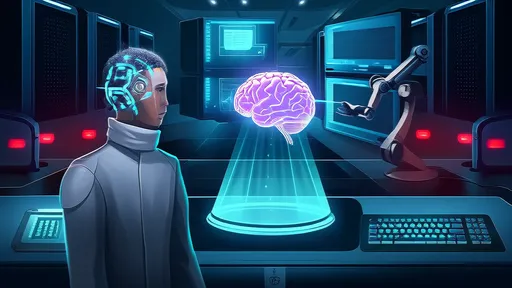
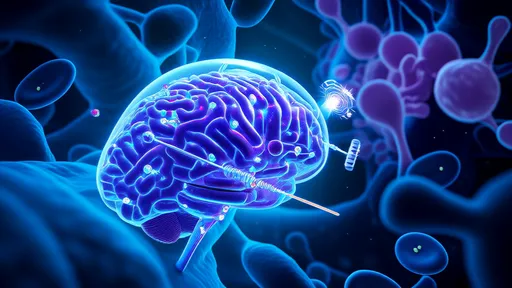
The intersection of neuroscience and law has always been a contentious frontier, but recent advancements in brain imaging technology have pushed the boundaries even further. The concept of "cloud-based trials" using brain scan data as legal evidence is no longer confined to the realm of science fiction. Courts in several jurisdictions are beginning to grapple with the implications of admitting neural data as proof of guilt, innocence, or even intent. This shift raises profound questions about privacy, accuracy, and the very nature of justice in a digitally mediated age.

At the heart of this debate is functional magnetic resonance imaging (fMRI) and electroencephalography (EEG), two technologies capable of mapping brain activity with increasing precision. Proponents argue that these tools offer an objective window into a defendant’s mind, eliminating the ambiguities of witness testimony or circumstantial evidence. For instance, in a 2023 case in California, fMRI data was used to corroborate a defendant’s claim of involuntary intoxication, leading to a reduced sentence. Such applications suggest a future where neural evidence could become as routine as DNA testing.

However, critics warn against overestimating the reliability of brain scans. Unlike DNA, which provides static biological information, neural data is highly dynamic and context-dependent. A brain scan capturing a moment of anger or deception may not reflect a person’s habitual state or intentions. False positives and misinterpretations are risks that could lead to wrongful convictions. Moreover, the subjective interpretation of scans by experts introduces another layer of uncertainty—what one neuroscientist sees as "deceptive activity," another might dismiss as stress or confusion.

The ethical ramifications are equally daunting. If brain data can be subpoenaed, does that erode the Fifth Amendment’s protection against self-incrimination? Legal scholars are divided. Some argue that neural patterns are akin to physical evidence, like fingerprints, while others contend they are extensions of private thought. The lack of clear legal precedents leaves courts navigating uncharted territory. In Europe, the GDPR’s strict biometric data protections have already clashed with prosecutors attempting to access defendants’ brain scans, foreshadowing global conflicts over neuro-privacy.

Beyond criminal law, the rise of "cloud-based neural evidence" could reshape civil litigation. Insurance companies might demand brain scans to verify chronic pain claims, or employers could use them to screen for loyalty. The commercialization of such technology is already underway: startups now offer "lie detection" services using portable EEG devices, despite skepticism from the scientific community. This commodification of cognition risks creating a surveillance society where mental privacy is extinct.

Yet, the potential benefits cannot be ignored. For victims of severe trauma or stroke who cannot communicate verbally, brain scans might be their only means of participating in legal proceedings. Researchers at Stanford have demonstrated that fMRI can decode rudimentary "yes/no" responses from non-responsive patients, offering a voice to the voiceless. Similarly, scans could exonerate individuals falsely accused of crimes by proving a lack of criminal intent—a application that civil rights advocates hail as revolutionary.

The technological arms race further complicates matters. As AI algorithms grow adept at parsing neural data, the line between voluntary and involuntary mind-reading blurs. China’s reported experiments with "brain surveillance" in Xinjiang highlight dystopian possibilities, where dissent could be preemptively punished based on predictive scans. Meanwhile, defense attorneys in the U.S. are exploring counter-technologies—neural "jamming" devices that distort scans to protect clients’ mental privacy. This escalating tension between transparency and autonomy may define 21st-century jurisprudence.

Public perception remains polarized. A 2024 Pew Research survey found that 52% of Americans would oppose brain scans as evidence in court, citing fears of government overreach. Conversely, crime victims’ families often champion the technology; after the Sandy Hook tragedy, some parents advocated mandating neural screenings for gun purchasers to detect violent tendencies. Such emotional appeals amplify the stakes, transforming what was once a speculative debate into an urgent policy dilemma.

Legislative bodies are struggling to keep pace. Only Japan and Chile have enacted laws specifically regulating neuro-evidence, treating it as a special category requiring judicial oversight. The U.N. has convened a working group on "neuro-rights," but progress is slow. Without international standards, the admissibility of brain data varies wildly—from Brazilian courts rejecting it entirely to Indian prosecutors using it in high-profile corruption cases. This patchwork system risks creating "neuro-justice havens" where verdicts depend on geography rather than facts.

Perhaps the most philosophical objection concerns free will itself. If our decisions are merely the output of neural algorithms, can anyone truly be held accountable? Some neuroscientists testify that certain behaviors—like compulsive crimes—are "hardwired," challenging foundational legal concepts of culpability. This deterministic view collides with the justice system’s presumption of moral agency, potentially unraveling centuries of legal theory. Judges increasingly find themselves playing amateur philosophers, weighing reductionist science against humanistic principles.

As the technology matures, interim solutions may emerge. Some propose treating brain data like psychiatric evaluations—admissible but not conclusive, always requiring corroboration. Others advocate for "neuro-blind" juries that hear expert testimony without seeing colorful fMRI images that could unduly influence decisions. Tech companies, sensing both profit and peril, are calling for industry-led certification of neural evidence tools, though skeptics question whether self-regulation suffices.

What remains undeniable is that the genie is out of the bottle. From cloud-stored brain scans used in remote trials to AI analyzing micro-expressions in virtual courtrooms, the legal landscape is transforming. The challenge now is to harness neuroscience’s power without sacrificing the humanity at law’s core. As one Supreme Court justice recently mused during oral arguments, "We used to ask ‘What would a reasonable person do?’ Soon, we may be asking ‘What does a reasonable brain look like?’" The answer will shape justice for generations to come.
Recommend Posts
Biology

Virus Nano Welders": Bacteriophage Assembly of Quantum Dot Chips

By /Jul 29, 2025

In a groundbreaking fusion of biology and nanotechnology, scientists have harnessed the precision of bacteriophages—viruses that infect bacteria—to assemble quantum dot arrays with near-atomic accuracy. Dubbed "nano-welders," these engineered phages are rewriting the rules of semiconductor manufacturing, offering a sustainable and scalable alternative to traditional lithography. The implications for next-gen computing, photonics, and biomedical sensing are staggering.
Biology

DNA Family Hunting": The Privacy Dilemma of Genetic Genealogy Investigations

By /Jul 29, 2025

The golden age of genetic genealogy dawned with a promise to reunite long-lost relatives and illuminate shadowy branches of family trees. Yet this same technology now casts an uncomfortable glare on the delicate balance between justice and privacy, as law enforcement increasingly turns to consumer DNA databases to solve cold cases through "familial searching." What began as a hobbyist's tool for tracing ancestry has become a double-edged sword in forensic investigations.
Biology

Fungal Earthquake-Resistant Cement": Mycelium Self-Repairs Fractured Concrete

By /Jul 29, 2025

In a groundbreaking development that could revolutionize the construction industry, scientists have turned to an unlikely ally in the quest for more resilient infrastructure: fungi. Researchers are harnessing the remarkable properties of mycelium—the thread-like vegetative part of fungi—to create self-healing concrete that can repair its own cracks. This innovative approach promises to address one of construction's most persistent challenges while offering surprising environmental benefits.
Biology

Consciousness Cloud Trial": Brain Scan Data as Legal Evidence

By /Jul 29, 2025

The intersection of neuroscience and law has always been a contentious frontier, but recent advancements in brain imaging technology have pushed the boundaries even further. The concept of "cloud-based trials" using brain scan data as legal evidence is no longer confined to the realm of science fiction. Courts in several jurisdictions are beginning to grapple with the implications of admitting neural data as proof of guilt, innocence, or even intent. This shift raises profound questions about privacy, accuracy, and the very nature of justice in a digitally mediated age.
Biology

Deep-Sea Gene Land Grab": The Battle for Patents on Open Ocean Microorganisms

By /Jul 29, 2025

The high seas have long been considered the last frontier of scientific exploration, a vast and largely uncharted realm teeming with life forms that defy imagination. Among these, microbial communities thriving in the abyssal depths have captured the attention of researchers and corporations alike. These microorganisms, adapted to extreme conditions of pressure, temperature, and darkness, possess unique genetic traits with potential applications in medicine, biotechnology, and industry. What was once a purely academic pursuit has now escalated into a high-stakes race to claim intellectual property rights over these genetic resources—a phenomenon critics have dubbed "biopiracy of the deep."
Biology

Gene 'Enhancement Tax': Legislation for Social Compensation in Athlete Modification"

By /Jul 29, 2025

The world of competitive sports stands at the precipice of a genetic revolution. As CRISPR technology and other gene-editing tools become increasingly sophisticated, the line between natural talent and engineered advantage grows disturbingly thin. This emerging reality has prompted legislators in several countries to propose a radical solution: the Genetic Enhancement Tax, colloquially known as the "Gene Tax".
Biology

Leaf Photovoltaic Matrix": Optimizing Light Energy Transmission with Maize Vein Design

By /Jul 29, 2025

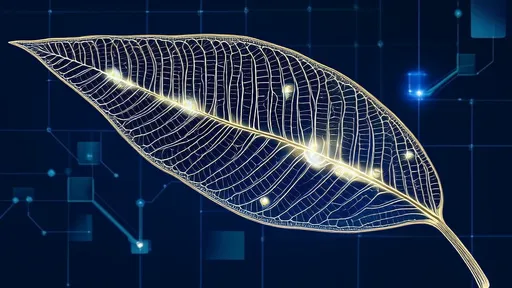
In the quest for more efficient solar energy solutions, researchers are turning to an unexpected source of inspiration: the humble corn leaf. A recent breakthrough in biomimicry has revealed that the intricate vein patterns of maize leaves hold secrets to optimizing light absorption and energy distribution in photovoltaic systems. This discovery could pave the way for a new generation of bio-inspired solar panels that mimic nature's 350-million-year-old blueprint for harvesting sunlight.
Biology

Vibration Key": Specific Frequency Sound Waves Break Dormancy

By /Jul 29, 2025

In a quiet laboratory at the University of California, a team of plant biologists has stumbled upon a remarkable discovery that could revolutionize agriculture. The researchers found that certain sound frequencies can effectively "wake up" dormant seeds, coaxing them to germinate with unprecedented speed and uniformity. This phenomenon, poetically dubbed "vibrational keys," suggests that plants may respond to acoustic cues in ways we're only beginning to understand.
Biology

Tree Carbon Coin System": Dynamic Regulation of Carbon Allocation by Mycorrhizal Networks

By /Jul 29, 2025

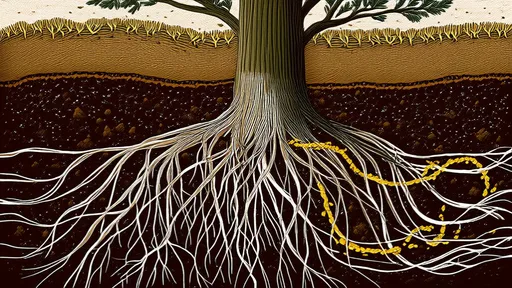
The hidden economy of the forest floor operates on a currency more ancient than human trade systems: carbon. Beneath our feet, vast mycorrhizal networks act as subterranean stock exchanges, where trees and fungi negotiate complex deals of nutrients for carbohydrates. Recent research reveals these symbiotic relationships involve sophisticated dynamic regulation of carbon allocation - a natural "carbon coin" system that maintains forest health and resilience.
Biology

Roots of Quantum Gravity": Plant Perception of Gravity through Quantum Coherence

By /Jul 29, 2025

In a groundbreaking discovery that bridges botany and quantum physics, researchers have uncovered evidence suggesting plants may utilize quantum coherence effects to sense gravity. This revolutionary finding challenges conventional understanding of both plant biology and gravitational perception, opening new frontiers in our comprehension of how living organisms interact with fundamental physical forces.
Biology

Flower 'Heat Decoy': Corpse-Mimicking Temperature Fluctuations in Amorphophallus Titanum"

By /Jul 29, 2025

The botanical world is full of bizarre adaptations, but few are as macabre—or as ingenious—as the titan arum (Amorphophallus titanum), colloquially known as the corpse flower. This infamous plant, native to the rainforests of Sumatra, has evolved a grotesque yet brilliant survival strategy: it mimics the scent and thermal profile of rotting flesh to attract carrion beetles and flesh flies, its primary pollinators. While its putrid odor has long been studied, recent research reveals an even more sophisticated trick—temperature fluctuations that enhance the illusion of a decaying carcass.
Biology

Acoustic Stealth": Shielding Organs from Ultrasonic Detection of Immune Cells

By /Jul 29, 2025

In a groundbreaking development that could revolutionize organ transplantation and autoimmune therapies, scientists have unveiled a novel approach to achieving "acoustic invisibility" for specific tissues. By harnessing precisely tuned ultrasound waves, researchers have successfully shielded transplanted pancreatic islet cells from immune detection in animal models. This technique, which creates a temporary protective bubble around delicate cells, offers hope for millions suffering from type 1 diabetes who currently face lifelong immunosuppression after islet cell transplants.
Biology

AI Virus Hunter": Predicting Zoonotic Disease Hotspots Across Species

By /Jul 29, 2025

In the dense jungles of Central Africa, where the boundaries between human settlements and wildlife blur, a new breed of disease detectives is emerging. These "virus hunters" aren't clad in hazmat suits or wielding syringes—they're artificial intelligence systems crunching terabytes of ecological, genetic, and climatic data to predict where the next zoonotic spillover might occur. Their mission: to identify the geographical hotspots where animal-borne pathogens are most likely to jump species and trigger the next potential pandemic.
Biology

Aging Cell Incinerator": Activation of Lysosomal Autophagy Clearance Technology

By /Jul 29, 2025

In a groundbreaking development that could redefine aging research, scientists have unveiled a novel approach to clearing senescent cells—dubbed the "cellular incinerator" mechanism. This technique leverages enhanced lysosomal autophagy to selectively target and eliminate these dysfunctional cells, which accumulate with age and contribute to tissue decline. The discovery, spearheaded by a team at the Aging Research Institute of Basel, offers a promising avenue for interventions aimed at extending healthspan.
Biology

Mitochondrial Power Bank": Engineered Exosome Delivery of Healthy Mitochondria

By /Jul 29, 2025

In a groundbreaking development that could revolutionize cellular medicine, researchers have pioneered a novel approach to mitochondrial therapy using engineered exosomes as biological delivery vehicles. Dubbed "mitochondrial power banks," these customized nanoscale carriers show remarkable potential for treating diseases linked to impaired cellular energy production.
Biology

Cancer Dormancy Cage": Mimicking Biological Materials to Physically Block Metastatic Lesions

By /Jul 29, 2025

In a groundbreaking development that could redefine cancer treatment strategies, researchers are exploring the concept of putting metastatic cancer cells into a permanent state of dormancy using bioengineered "cages" made from advanced biomaterials. This approach, often referred to as the "dormancy cage" strategy, represents a paradigm shift from traditional therapies that aim to kill cancer cells outright.
Biology

Neuro Optical Fiber": Hydrogel Optical Path Repairs Optic Nerve

By /Jul 29, 2025

In a groundbreaking development that could revolutionize the treatment of vision impairment, researchers have successfully utilized hydrogel-based optical fibers to repair damaged optic nerves. This innovative approach, often referred to as "neural optical fibers," leverages the unique properties of hydrogels to create biocompatible light pathways that can restore visual signal transmission where natural nerve function has been compromised.
Biology

Protein Nano-Submarines": AI-Designed Carriers for Penetrating the Blood-Brain Barrier

By /Jul 29, 2025

In a groundbreaking development at the intersection of nanotechnology and artificial intelligence, researchers have engineered protein-based "nano-submarines" capable of crossing the blood-brain barrier (BBB). This long-standing challenge in drug delivery could soon be overcome thanks to AI-designed molecular carriers that navigate the body’s defenses with unprecedented precision.
Biology

Microbial Plastic Miners": Gut Bacteria of Yellow Mealworms Degrade Polyurethane

By /Jul 29, 2025

In a groundbreaking discovery that could revolutionize waste management, scientists have identified a surprising ally in the fight against plastic pollution: the humble mealworm. More specifically, researchers have uncovered that microbial communities within the mealworm's gut possess the remarkable ability to break down polyurethane, one of the most notoriously persistent plastics plaguing our planet.
Biology

Fountain of Youth for Cells: Epigenetic Eraser Reverses Cellular Age"

By /Jul 29, 2025

In a groundbreaking development that could redefine our understanding of aging, scientists have discovered what they're calling the "cellular reset button" – a novel approach to reversing cellular age through epigenetic reprogramming. This revolutionary technique doesn't just slow down the aging process; it appears to turn back the biological clock at the most fundamental level.