In a groundbreaking discovery that bridges botany and quantum physics, researchers have uncovered evidence suggesting plants may utilize quantum coherence effects to sense gravity. This revolutionary finding challenges conventional understanding of both plant biology and gravitational perception, opening new frontiers in our comprehension of how living organisms interact with fundamental physical forces.
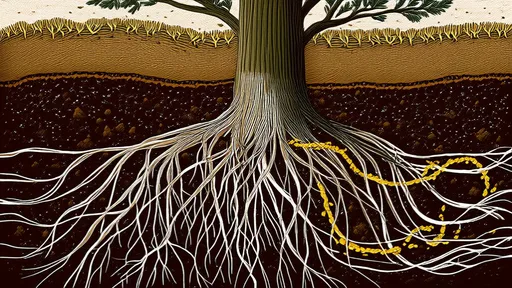
The study, published in a prestigious interdisciplinary journal, reveals how specialized cells in plant roots appear to exploit quantum-level phenomena to detect minute changes in gravitational pull. Unlike traditional mechanical models of gravitropism (the process by which plants grow in response to gravity), this new research points to a far more sophisticated mechanism operating at subatomic scales.
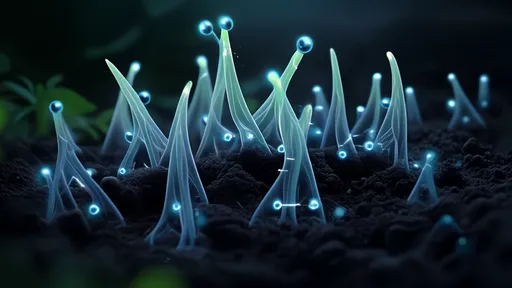
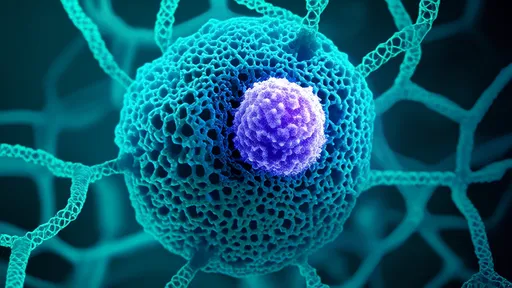
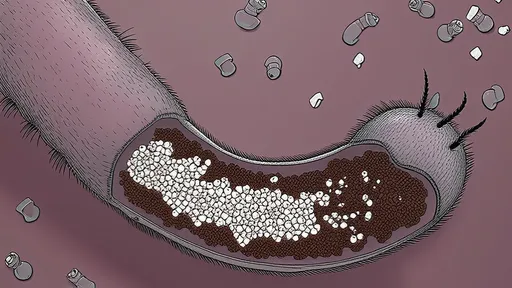
At the heart of this discovery lies the enigmatic statocyte cells found in root caps. These cells contain starch-filled organelles called statoliths that were long believed to simply sediment in response to gravity, triggering growth responses. However, advanced imaging techniques and quantum coherence measurements have now shown these organelles may function as biological quantum sensors.
The quantum connection emerges through the behavior of electrons within the statoliths. Researchers observed persistent quantum superposition states lasting remarkably long durations for biological systems - up to several milliseconds. This coherence time appears sufficient to allow interference patterns to form between different positional states of the statolith particles as they respond to gravitational forces.
What makes this finding particularly astonishing is the warm, wet environment of plant cells - conditions that typically destroy quantum effects through rapid decoherence. The study suggests plants have evolved specialized molecular structures that protect these delicate quantum states, possibly through mechanisms resembling those proposed for quantum biology in animal navigation systems.
The implications extend far beyond basic plant physiology. This discovery may force us to reconsider the boundary between quantum and classical physics in biological systems. If plants can maintain quantum coherence to sense gravity, what other biological processes might exploit similar quantum effects? The research team speculates this could represent a fundamental biological adaptation shared across many organisms.
Experimental evidence came from combining several cutting-edge techniques. Ultra-sensitive magnetometry revealed subtle magnetic field fluctuations consistent with electron spin states maintaining quantum coherence. Meanwhile, novel interferometry methods detected gravitational-induced phase shifts at the cellular level that classical physics cannot explain.
Perhaps most intriguing is the theoretical framework proposed to explain these observations. The researchers suggest that the statolith system operates as a biological variant of a quantum gravity sensor, where positional superpositions of starch granules create interference patterns that amplify gravitational signals. This would allow plants to detect incredibly subtle variations in gravitational pull - potentially explaining how roots navigate complex soil environments with such precision.
The study also raises profound questions about the evolutionary origins of quantum sensing in plants. Did this capability emerge as an adaptation to particular environmental challenges? Or might it represent an ancient biological mechanism predating the divergence of plant and animal kingdoms? Fossil evidence of early root systems shows remarkable sophistication, hinting that quantum-assisted gravity sensing may have deep evolutionary roots.
Practical applications of this discovery could be transformative. Understanding plant quantum sensing might lead to revolutionary agricultural technologies, enabling crops to better adapt to challenging environments. It could also inspire new generations of ultra-sensitive gravity sensors for geological exploration or even spacecraft navigation systems modeled on biological principles.
Critically, this research doesn't negate classical models of gravitropism but rather complements them by revealing an additional layer of sophistication in plant sensory systems. The sedimentation of statoliths still occurs, but now appears accompanied by quantum phenomena that enhance sensitivity and response precision.
As with any paradigm-shifting discovery, these findings will require extensive verification. The research team has outlined a comprehensive program for follow-up studies, including investigations into whether similar quantum effects occur in different plant species and under varying environmental conditions. Early indications suggest this phenomenon might be widespread across the plant kingdom.
This discovery also rekindles debates about the role of quantum physics in biology. While quantum effects in photosynthesis and animal magnetoreception have gained acceptance, gravity sensing represents a new frontier. The warm, noisy cellular environment was long thought incompatible with delicate quantum states, yet plants appear to have found nature's workaround.
Looking ahead, researchers anticipate this work will spur collaborations across physics, biology, and materials science. The protective mechanisms plants use to preserve quantum coherence could inspire new approaches to maintaining qubit stability in quantum computers. Similarly, understanding how biological systems amplify quantum signals might revolutionize sensor technology.
For now, this remarkable finding stands as a testament to nature's ingenuity - showing that even in the quiet growth of a plant's roots, there may exist subtle quantum dances choreographed by gravity itself. As we continue to explore this quantum-biological frontier, we may find that plants have been sophisticated quantum physicists all along, working their magic quietly beneath our feet.
By /Jul 29, 2025

By /Jul 29, 2025
By /Jul 29, 2025

By /Jul 29, 2025

By /Jul 29, 2025

By /Jul 29, 2025
By /Jul 29, 2025

By /Jul 29, 2025
By /Jul 29, 2025
By /Jul 29, 2025

By /Jul 29, 2025
By /Jul 29, 2025

By /Jul 29, 2025
By /Jul 29, 2025
By /Jul 29, 2025
By /Jul 29, 2025
By /Jul 29, 2025
By /Jul 29, 2025
By /Jul 29, 2025
By /Jul 29, 2025
