DNA Family Hunting": The Privacy Dilemma of Genetic Genealogy Investigations

Jul 29, 2025 By

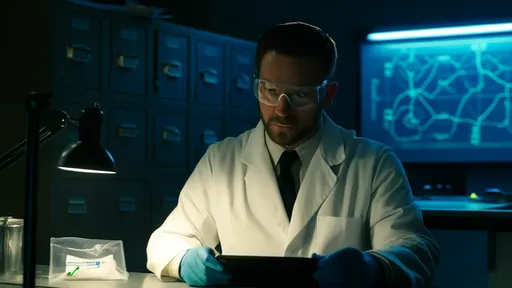
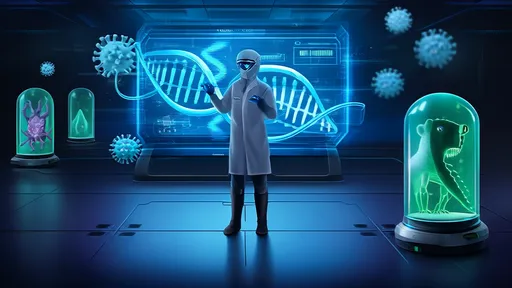
The golden age of genetic genealogy dawned with a promise to reunite long-lost relatives and illuminate shadowy branches of family trees. Yet this same technology now casts an uncomfortable glare on the delicate balance between justice and privacy, as law enforcement increasingly turns to consumer DNA databases to solve cold cases through "familial searching." What began as a hobbyist's tool for tracing ancestry has become a double-edged sword in forensic investigations.

In 2018, the arrest of Joseph James DeAngelo—the notorious Golden State Killer—marked a watershed moment for investigative genetic genealogy (IGG). Detectives had uploaded crime scene DNA to GEDmatch, a public genealogy database, identifying distant relatives whose family trees eventually led to their suspect. The technique has since cracked over 200 cold cases, from the 1987 double murder of Tanya Van Cuylenborg and Jay Cook in Washington to the 1996 abduction of twelve-year-old Christine Jessop in Ontario.

The methodology seems deceptively simple: When traditional CODIS database searches fail to yield exact matches, investigators upload an unknown suspect's DNA profile to consumer platforms like FamilyTreeDNA or GEDmatch. These sites, which originally catered to ancestry researchers, allow comparisons across millions of user-submitted genomes. By identifying third or fourth cousins who share segments of DNA with the forensic sample, detectives can reverse-engineer family trees spanning generations.

Parabon NanoLabs, a Virginia-based company specializing in DNA phenotyping, has emerged as a key player in this field. Their Snapshot Kinship Inference tool analyzes single-nucleotide polymorphisms (SNPs) to predict relationships with startling accuracy. "We're not just looking for a needle in a haystack," explains CEO Steven Armentrout. "We're reconstructing the entire haystack from scattered strands."

Yet this haystack reconstruction raises profound ethical questions. Most users who spit into tubes for 23andMe or Ancestry.com never anticipated their genetic data becoming part of a digital dragnet. GEDmatch's policy shift in 2019—allowing law enforcement access by default—sparked outrage among privacy advocates. Although users can opt out, fewer than 10% have changed their settings, leaving hundreds of thousands of profiles available for forensic searches.

The legal landscape remains murky. Unlike the FBI's CODIS database, which contains profiles from convicted offenders and arrestees, consumer genetic platforms hold data from civilians who voluntarily submitted samples for recreational purposes. Fourth Amendment protections against unreasonable searches become nebulous when a suspect's identity is inferred through their second cousin's 2016 ancestry test. "This is parallel construction using genetics," warns Natalie Ram, a law professor at the University of Maryland. "Police are circumventing constitutional safeguards by outsourcing their searches to private companies."

Familial searching also amplifies concerns about racial bias in policing. Current genealogy databases overwhelmingly represent people of European descent—over 80% of 23andMe users self-report as white. This disparity means IGG disproportionately impacts white communities while offering fewer investigative leads for crimes affecting minority populations. The 2021 identification of the "Buckskin Girl," a homicide victim found in Ohio in 1981, was delayed for decades partly because her Native American ancestry left fewer genetic markers in commercial databases.

Compounding these issues is the phenomenon of "genetic surveillance creep." Once uploaded for one investigation, DNA profiles remain accessible for future cases. The same technology that caught the Golden State Killer has been used to identify protesters from genetic material left at demonstrations. In China, authorities have reportedly combined IGG with facial recognition to target Uyghur minorities. As University of California, Davis, researcher Elizabeth Joh observes, "We're normalizing a world where your distant relative's curiosity about their heritage becomes your lifelong genetic exposure."

Some jurisdictions are pushing back. Maryland passed the first statewide IGG regulation in 2021, requiring judicial approval for forensic genetic genealogy searches. Meanwhile, companies like MyHeritage explicitly prohibit law enforcement use, while Ancestry.com retains the right to challenge subpoenas for user data. Yet these piecemeal approaches create a patchwork of standards across states and platforms.

The scientific community remains divided. Former FBI agent Steve Kramer champions IGG as "the most significant crime-fighting tool since fingerprinting," pointing to solved cases where all other leads had gone cold. But bioethicist Erin Murphy counters that current practices constitute "a warrantless search of millions of innocent people's DNA." She advocates for legislation requiring informed consent before any profile can be used in criminal investigations.

As the technology races ahead of policy, ordinary citizens face unsettling questions. Should donating DNA to cure disease mean automatically opting into a forensic database? Can you inherit genetic suspicion from ancestors you've never met? The answers may determine whether genetic genealogy becomes a trusted ally of justice—or a cautionary tale about privacy in the digital age.

What remains clear is that the double helix doesn't discriminate between personal curiosity and police work. Every vial of spit contains not just an individual's medical predispositions and ethnic background, but the biological blueprint of entire families—present and future. In solving yesterday's crimes, we may be compromising tomorrow's privacy in ways we're only beginning to understand.
Recommend Posts
Biology

Virus Nano Welders": Bacteriophage Assembly of Quantum Dot Chips

By /Jul 29, 2025

In a groundbreaking fusion of biology and nanotechnology, scientists have harnessed the precision of bacteriophages—viruses that infect bacteria—to assemble quantum dot arrays with near-atomic accuracy. Dubbed "nano-welders," these engineered phages are rewriting the rules of semiconductor manufacturing, offering a sustainable and scalable alternative to traditional lithography. The implications for next-gen computing, photonics, and biomedical sensing are staggering.
Biology

DNA Family Hunting": The Privacy Dilemma of Genetic Genealogy Investigations

By /Jul 29, 2025

The golden age of genetic genealogy dawned with a promise to reunite long-lost relatives and illuminate shadowy branches of family trees. Yet this same technology now casts an uncomfortable glare on the delicate balance between justice and privacy, as law enforcement increasingly turns to consumer DNA databases to solve cold cases through "familial searching." What began as a hobbyist's tool for tracing ancestry has become a double-edged sword in forensic investigations.
Biology

Fungal Earthquake-Resistant Cement": Mycelium Self-Repairs Fractured Concrete

By /Jul 29, 2025

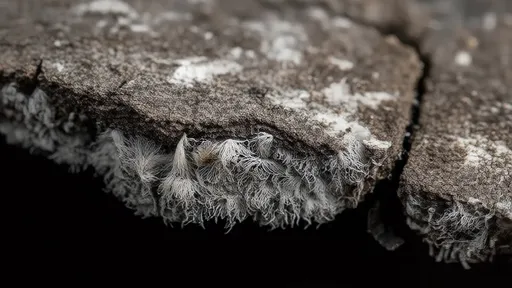
In a groundbreaking development that could revolutionize the construction industry, scientists have turned to an unlikely ally in the quest for more resilient infrastructure: fungi. Researchers are harnessing the remarkable properties of mycelium—the thread-like vegetative part of fungi—to create self-healing concrete that can repair its own cracks. This innovative approach promises to address one of construction's most persistent challenges while offering surprising environmental benefits.
Biology

Consciousness Cloud Trial": Brain Scan Data as Legal Evidence

By /Jul 29, 2025

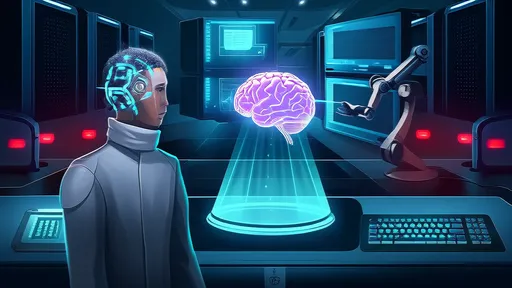
The intersection of neuroscience and law has always been a contentious frontier, but recent advancements in brain imaging technology have pushed the boundaries even further. The concept of "cloud-based trials" using brain scan data as legal evidence is no longer confined to the realm of science fiction. Courts in several jurisdictions are beginning to grapple with the implications of admitting neural data as proof of guilt, innocence, or even intent. This shift raises profound questions about privacy, accuracy, and the very nature of justice in a digitally mediated age.
Biology

Deep-Sea Gene Land Grab": The Battle for Patents on Open Ocean Microorganisms

By /Jul 29, 2025

The high seas have long been considered the last frontier of scientific exploration, a vast and largely uncharted realm teeming with life forms that defy imagination. Among these, microbial communities thriving in the abyssal depths have captured the attention of researchers and corporations alike. These microorganisms, adapted to extreme conditions of pressure, temperature, and darkness, possess unique genetic traits with potential applications in medicine, biotechnology, and industry. What was once a purely academic pursuit has now escalated into a high-stakes race to claim intellectual property rights over these genetic resources—a phenomenon critics have dubbed "biopiracy of the deep."
Biology

Gene 'Enhancement Tax': Legislation for Social Compensation in Athlete Modification"

By /Jul 29, 2025

The world of competitive sports stands at the precipice of a genetic revolution. As CRISPR technology and other gene-editing tools become increasingly sophisticated, the line between natural talent and engineered advantage grows disturbingly thin. This emerging reality has prompted legislators in several countries to propose a radical solution: the Genetic Enhancement Tax, colloquially known as the "Gene Tax".
Biology

Leaf Photovoltaic Matrix": Optimizing Light Energy Transmission with Maize Vein Design

By /Jul 29, 2025

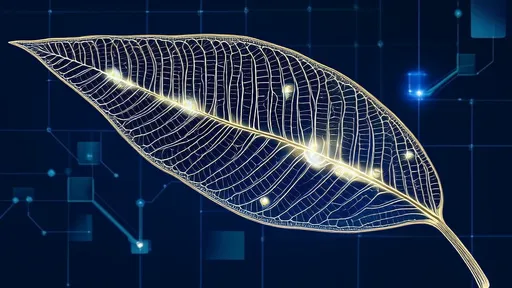
In the quest for more efficient solar energy solutions, researchers are turning to an unexpected source of inspiration: the humble corn leaf. A recent breakthrough in biomimicry has revealed that the intricate vein patterns of maize leaves hold secrets to optimizing light absorption and energy distribution in photovoltaic systems. This discovery could pave the way for a new generation of bio-inspired solar panels that mimic nature's 350-million-year-old blueprint for harvesting sunlight.
Biology

Vibration Key": Specific Frequency Sound Waves Break Dormancy

By /Jul 29, 2025

In a quiet laboratory at the University of California, a team of plant biologists has stumbled upon a remarkable discovery that could revolutionize agriculture. The researchers found that certain sound frequencies can effectively "wake up" dormant seeds, coaxing them to germinate with unprecedented speed and uniformity. This phenomenon, poetically dubbed "vibrational keys," suggests that plants may respond to acoustic cues in ways we're only beginning to understand.
Biology

Tree Carbon Coin System": Dynamic Regulation of Carbon Allocation by Mycorrhizal Networks

By /Jul 29, 2025

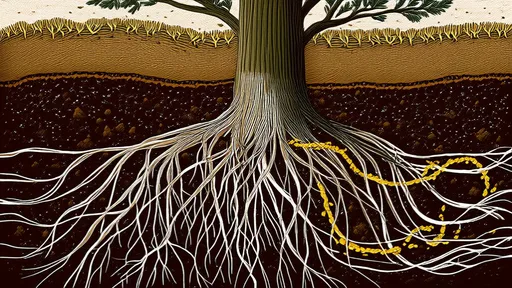
The hidden economy of the forest floor operates on a currency more ancient than human trade systems: carbon. Beneath our feet, vast mycorrhizal networks act as subterranean stock exchanges, where trees and fungi negotiate complex deals of nutrients for carbohydrates. Recent research reveals these symbiotic relationships involve sophisticated dynamic regulation of carbon allocation - a natural "carbon coin" system that maintains forest health and resilience.
Biology

Roots of Quantum Gravity": Plant Perception of Gravity through Quantum Coherence

By /Jul 29, 2025

In a groundbreaking discovery that bridges botany and quantum physics, researchers have uncovered evidence suggesting plants may utilize quantum coherence effects to sense gravity. This revolutionary finding challenges conventional understanding of both plant biology and gravitational perception, opening new frontiers in our comprehension of how living organisms interact with fundamental physical forces.
Biology

Flower 'Heat Decoy': Corpse-Mimicking Temperature Fluctuations in Amorphophallus Titanum"

By /Jul 29, 2025

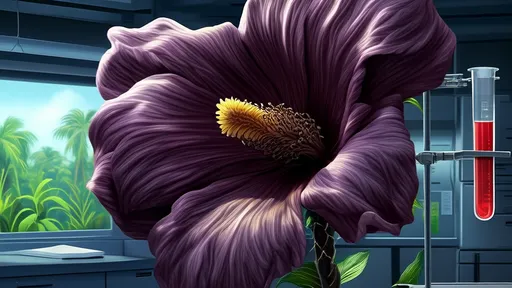
The botanical world is full of bizarre adaptations, but few are as macabre—or as ingenious—as the titan arum (Amorphophallus titanum), colloquially known as the corpse flower. This infamous plant, native to the rainforests of Sumatra, has evolved a grotesque yet brilliant survival strategy: it mimics the scent and thermal profile of rotting flesh to attract carrion beetles and flesh flies, its primary pollinators. While its putrid odor has long been studied, recent research reveals an even more sophisticated trick—temperature fluctuations that enhance the illusion of a decaying carcass.
Biology

Acoustic Stealth": Shielding Organs from Ultrasonic Detection of Immune Cells

By /Jul 29, 2025

In a groundbreaking development that could revolutionize organ transplantation and autoimmune therapies, scientists have unveiled a novel approach to achieving "acoustic invisibility" for specific tissues. By harnessing precisely tuned ultrasound waves, researchers have successfully shielded transplanted pancreatic islet cells from immune detection in animal models. This technique, which creates a temporary protective bubble around delicate cells, offers hope for millions suffering from type 1 diabetes who currently face lifelong immunosuppression after islet cell transplants.
Biology

AI Virus Hunter": Predicting Zoonotic Disease Hotspots Across Species

By /Jul 29, 2025

In the dense jungles of Central Africa, where the boundaries between human settlements and wildlife blur, a new breed of disease detectives is emerging. These "virus hunters" aren't clad in hazmat suits or wielding syringes—they're artificial intelligence systems crunching terabytes of ecological, genetic, and climatic data to predict where the next zoonotic spillover might occur. Their mission: to identify the geographical hotspots where animal-borne pathogens are most likely to jump species and trigger the next potential pandemic.
Biology

Aging Cell Incinerator": Activation of Lysosomal Autophagy Clearance Technology

By /Jul 29, 2025

In a groundbreaking development that could redefine aging research, scientists have unveiled a novel approach to clearing senescent cells—dubbed the "cellular incinerator" mechanism. This technique leverages enhanced lysosomal autophagy to selectively target and eliminate these dysfunctional cells, which accumulate with age and contribute to tissue decline. The discovery, spearheaded by a team at the Aging Research Institute of Basel, offers a promising avenue for interventions aimed at extending healthspan.
Biology

Mitochondrial Power Bank": Engineered Exosome Delivery of Healthy Mitochondria

By /Jul 29, 2025

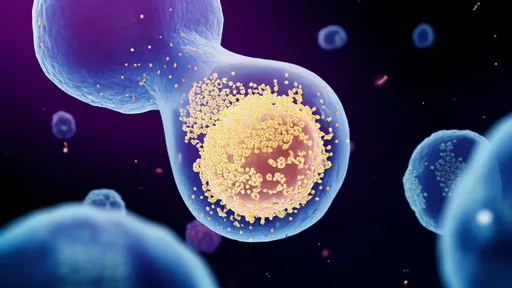
In a groundbreaking development that could revolutionize cellular medicine, researchers have pioneered a novel approach to mitochondrial therapy using engineered exosomes as biological delivery vehicles. Dubbed "mitochondrial power banks," these customized nanoscale carriers show remarkable potential for treating diseases linked to impaired cellular energy production.
Biology

Cancer Dormancy Cage": Mimicking Biological Materials to Physically Block Metastatic Lesions

By /Jul 29, 2025

In a groundbreaking development that could redefine cancer treatment strategies, researchers are exploring the concept of putting metastatic cancer cells into a permanent state of dormancy using bioengineered "cages" made from advanced biomaterials. This approach, often referred to as the "dormancy cage" strategy, represents a paradigm shift from traditional therapies that aim to kill cancer cells outright.
Biology

Neuro Optical Fiber": Hydrogel Optical Path Repairs Optic Nerve

By /Jul 29, 2025

In a groundbreaking development that could revolutionize the treatment of vision impairment, researchers have successfully utilized hydrogel-based optical fibers to repair damaged optic nerves. This innovative approach, often referred to as "neural optical fibers," leverages the unique properties of hydrogels to create biocompatible light pathways that can restore visual signal transmission where natural nerve function has been compromised.
Biology

Protein Nano-Submarines": AI-Designed Carriers for Penetrating the Blood-Brain Barrier

By /Jul 29, 2025

In a groundbreaking development at the intersection of nanotechnology and artificial intelligence, researchers have engineered protein-based "nano-submarines" capable of crossing the blood-brain barrier (BBB). This long-standing challenge in drug delivery could soon be overcome thanks to AI-designed molecular carriers that navigate the body’s defenses with unprecedented precision.
Biology

Microbial Plastic Miners": Gut Bacteria of Yellow Mealworms Degrade Polyurethane

By /Jul 29, 2025

In a groundbreaking discovery that could revolutionize waste management, scientists have identified a surprising ally in the fight against plastic pollution: the humble mealworm. More specifically, researchers have uncovered that microbial communities within the mealworm's gut possess the remarkable ability to break down polyurethane, one of the most notoriously persistent plastics plaguing our planet.
Biology

Fountain of Youth for Cells: Epigenetic Eraser Reverses Cellular Age"

By /Jul 29, 2025

In a groundbreaking development that could redefine our understanding of aging, scientists have discovered what they're calling the "cellular reset button" – a novel approach to reversing cellular age through epigenetic reprogramming. This revolutionary technique doesn't just slow down the aging process; it appears to turn back the biological clock at the most fundamental level.