In the quest for more efficient solar energy solutions, researchers are turning to an unexpected source of inspiration: the humble corn leaf. A recent breakthrough in biomimicry has revealed that the intricate vein patterns of maize leaves hold secrets to optimizing light absorption and energy distribution in photovoltaic systems. This discovery could pave the way for a new generation of bio-inspired solar panels that mimic nature's 350-million-year-old blueprint for harvesting sunlight.
The Vein Network Phenomenon
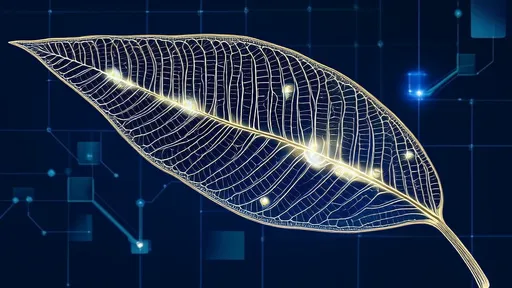
At first glance, the parallel veins running along a corn leaf appear deceptively simple. Yet under microscopic examination, these vascular networks exhibit a fractal-like branching structure that has evolved to maximize photosynthetic efficiency. Scientists at the University of Cambridge discovered that this natural architecture performs three critical functions simultaneously: it transports water and nutrients, provides structural support, and - most intriguingly - acts as a light-guiding system that distributes photons evenly across the leaf surface.
What makes corn leaves particularly remarkable is their adaptation to variable light conditions. Unlike many plants with random vein patterns, maize developed ordered parallel veins that allow leaves to twist and reposition throughout the day. This dynamic movement, combined with the vein network's light-channeling properties, enables corn plants to maintain high photosynthetic rates even as sunlight angles change.
From Fields to Solar Farms
Engineering teams have begun translating these biological principles into photovoltaic designs. The most promising approach involves creating "photonic veins" - microscopic channels in solar panels that mimic corn leaf vasculature. These artificial veins serve dual purposes: they conduct electricity like traditional circuits while also redirecting light to under-illuminated areas of the panel.
Early prototypes show a 15-20% improvement in energy capture during oblique sunlight conditions - precisely when conventional flat panels perform poorly. The bio-inspired design proves particularly effective in morning, evening, and winter light conditions, potentially solving one of solar energy's longstanding challenges: consistent performance across all seasons and times of day.
The breakthrough extends beyond mere efficiency gains. By studying how corn veins prevent damage from intense sunlight, researchers have developed self-regulating photovoltaic materials that reduce thermal degradation. This biomimetic approach could extend solar panel lifespans by 30-40%, dramatically improving the technology's sustainability profile.
Challenges in Scaling Nature's Design
Translating biological perfection into manufacturable technology presents significant hurdles. Corn leaves grow their vein networks through self-organizing processes that are difficult to replicate industrially. Researchers are experimenting with 3D printing techniques that can create similar hierarchical structures, but achieving both nanoscale precision and mass production scalability remains elusive.
Another challenge lies in balancing light distribution with electrical conductivity. Natural leaf veins prioritize fluid transport over electron flow, requiring engineers to develop composite materials that optimize both functions. Recent advances in graphene-based hybrids show promise, combining the optical properties of biological systems with the electrical performance of synthetic materials.
The Future of Photosynthetic Photovoltaics
As research progresses, the implications extend far beyond improved solar panels. The corn leaf model suggests possibilities for integrated energy systems that combine light harvesting, storage, and distribution in single unified structures - much like leaves perform multiple functions simultaneously. Some laboratories are already working on "energy leaves" that could clad buildings in power-generating facades indistinguishable from living vegetation.
Agricultural experts note the poetic symmetry in this development. Corn - one of humanity's first domesticated crops - may now help cultivate our renewable energy future. The same evolutionary pressures that shaped maize over millennia are informing cutting-edge sustainable technology, proving that sometimes, the best solutions grow right before our eyes.
Field trials of commercial-scale "photon vein" solar arrays are expected to begin within two years, potentially revolutionizing how we harness the sun's energy. As one researcher remarked, "We're not just building better solar panels - we're learning to think like leaves."
By /Jul 29, 2025

By /Jul 29, 2025
By /Jul 29, 2025

By /Jul 29, 2025

By /Jul 29, 2025

By /Jul 29, 2025
By /Jul 29, 2025
By /Jul 29, 2025
By /Jul 29, 2025
By /Jul 29, 2025

By /Jul 29, 2025
By /Jul 29, 2025
By /Jul 29, 2025
By /Jul 29, 2025
By /Jul 29, 2025
By /Jul 29, 2025
By /Jul 29, 2025

By /Jul 29, 2025
By /Jul 29, 2025
By /Jul 29, 2025
